
On the buses?
My thoughts on the pros and cons of public transport…
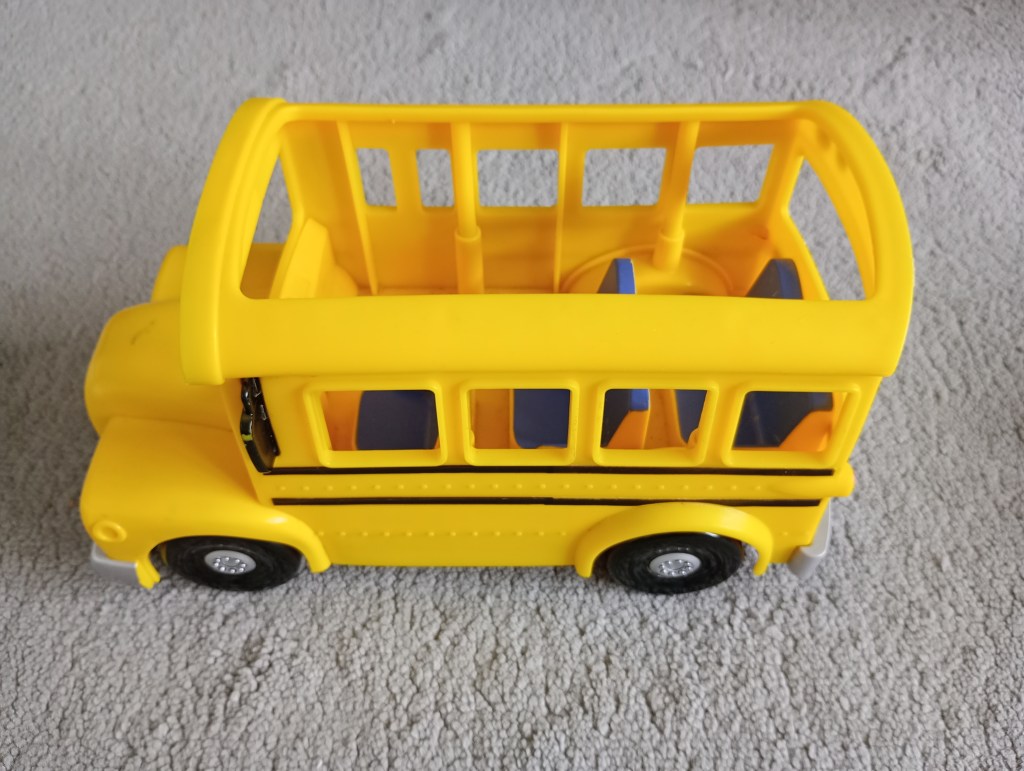
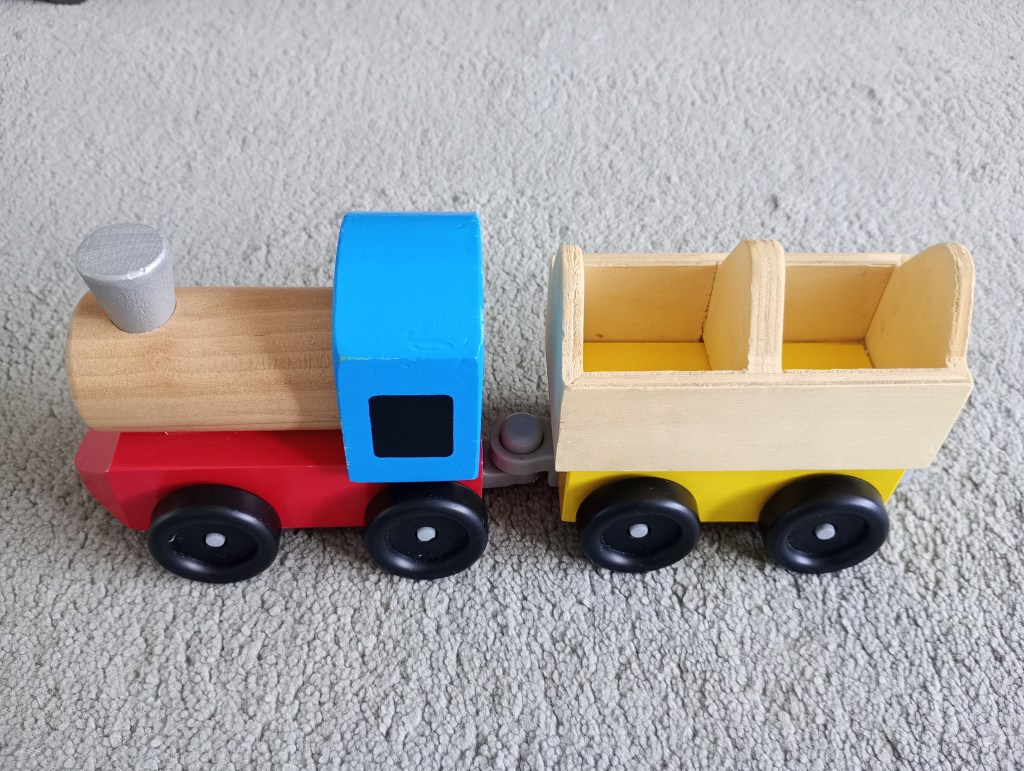
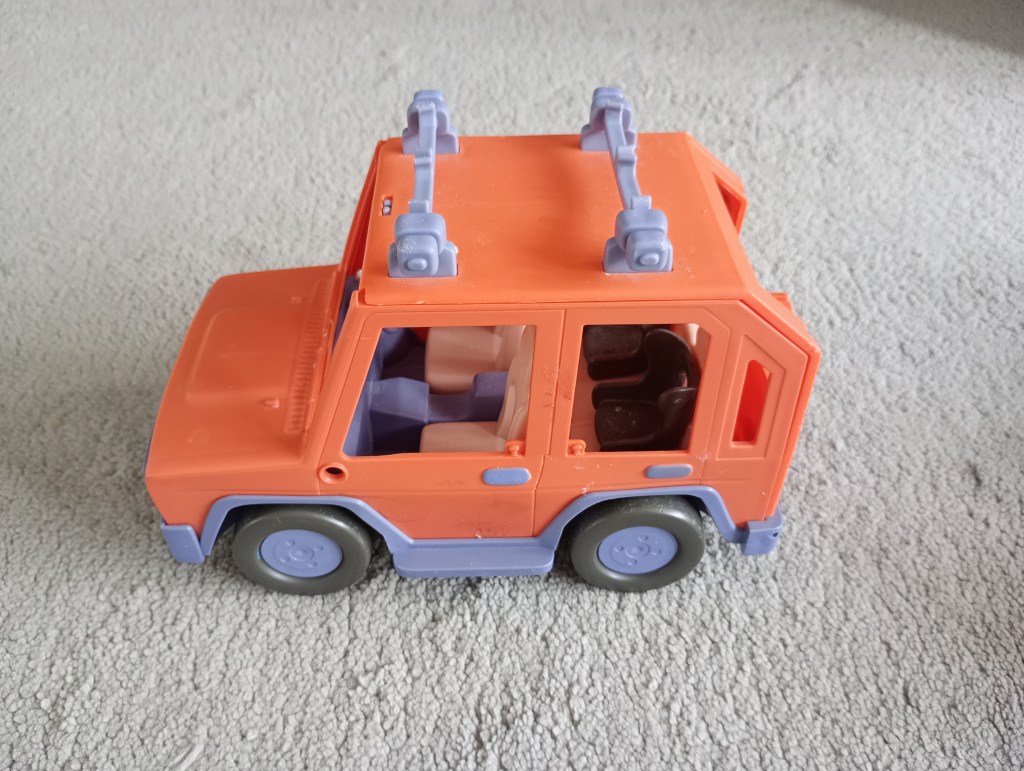
That’s a whole African Elephant’s worth of CO2 gone. Sounds good, right? Hop on a bus or train and save the world.
But how easy is it to actually do?
With news headlines screaming things like “bus services cut by more than 80%” and “train fares increase by 4.6%”, I decided to reflect on what my experience would be if I tried to use a bus or train for travel, versus a car, in my local area…
Accessibility
Bus
So first off: “Is there a bus service near me?”
The answer is 100% yes. I’m very fortunate to have a seven day a week bus service (let’s call it Route #1) that looks like this…
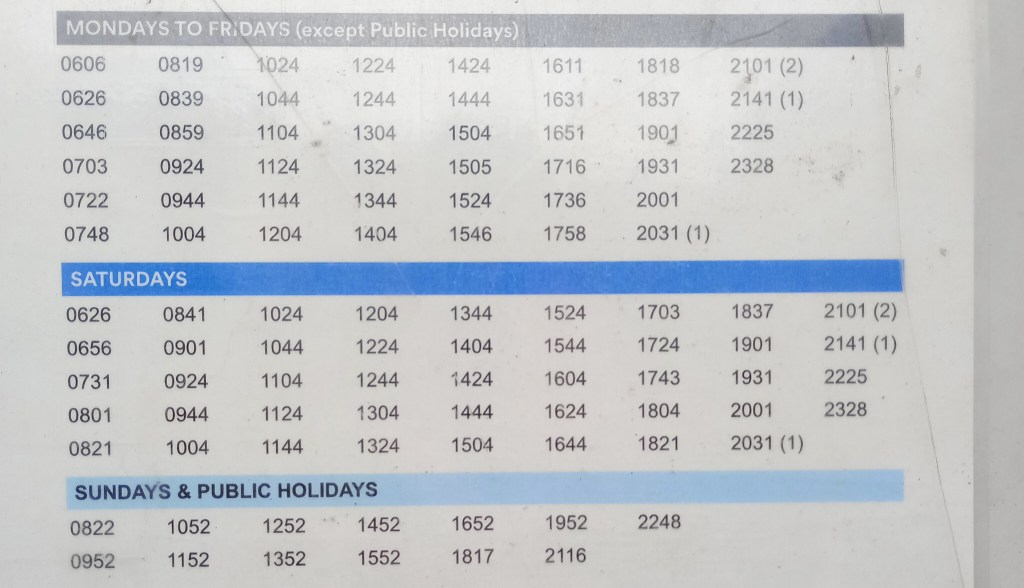
It runs every 20-ish minutes (or hourly on a Sunday) and goes right past my house.
There is, however, one near me that runs on a different route (Route #2), with a timetable that looks like this…
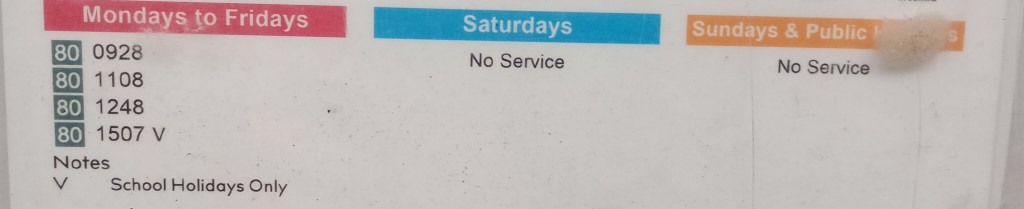
I have to look at timings like that and think “what is the point?” There’s three buses a day during the week (with an extra one (whoopee) in school holidays), with the last one leaving at 12.48pm for 39 weeks of the year and nothing on the weekend. I guess someone must be benefiting from it but I can’t see how, since you couldn’t use it to get to school or work before 9am or back home after 5pm.
But Route #1 is good, so we’ll use that.
Train
There is a train station near me that has the same start and end destination as bus Route #1. However, it would take me nearly three hours to walk there. By bike, it’s 36 minutes, by bus 25 minutes and by car 16 minutes. So, it’s doable with wheels but there’s an extra cost (physically and financially) attached to reaching it.
In terms of times, it runs every 20 minutes, so on par with the bus.
Car
I have a car but I share it with my husband, so it’s not always available if he needs to use it for work.
Accessibility winner
I was initially going to say the Car won, then I thought, it’s the Bus (on Route #1), because it’s there regardless of whether my husband needs to travel or not and it’s on a good bus route (although, if I only had Route #2, the bus would definitely be at the bottom of the pile). If the train was nearby, it would match the bus.
But then I thought – the buses and trains run on a timetable and even with a relatively short gap between them, if my car is at home, I can get in it at whatever time I like, which is worth its weight in gold.
So, it’s back to the automobile we go. However, one thing I would consider with a car as being less accessible than public transport is that you can’t guarantee a parking space when you arrive. At least with the bus and train, all you have to do is get off. Winner: Car
Destinations

Using #Route 1 as our basis, I’ll compare direct route destinations.
Now, I tried to streamline my research by asking ChatGPT to do a bit of the leg-work for me, but after it tried to include train stations that no longer exist and confidently told me there were destinations on this route that are actually located 86 miles away, I decided to mostly go back to good old Google…
Bus
There are 17 main stops on the route, plus many, many request stops – where I live, there are literally bus stops about a one minute walk apart. That always makes me smile, because you can bet people stay on the bus until they reach the exact one they want, even if it’s only just stopped.
The route covers around 40 miles, stopping in 9 main villages, towns and cities.
Train
The train starts and ends in the same town and city as the bus route does, with just one stop in between. It covers one town, one village and one city, covering 17 miles.
Car
The shortest car journey from the start and end bus stations for Route #1 is around 18 miles. It goes past around five towns, villages and cities.
Destinations winner
The bus hands down gives the biggest scope of destinations and a great opportunity to see new places you might miss on a direct car route or fast train service. Winner: Bus
Travel time

To travel from the start to the end of Route #1 by…
Bus
You’d be cruising for around an hour and a half.
Train
It would take up to 20 minutes.
Car
You’re looking at about 35 minutes.
Accessibility winner
Speed of travel is definitely where the bus falls down in terms of being good transport vs other options.
Because it encompasses so many stops, it adds a significant amount of time compared to travelling directly from A to B.
If you can start easily from the train station, then it’s the speediest option by far, and wouldn’t be affected by congestion etc, like travelling on the roads would (although, obviously, train travel isn’t without its delays – signalling problems, leaves on the line, strikes… I could go on). Winner: Train
Waiting area comfort

Bus
This all depends on where you start. Route #1 starts at a bus station, which has a large, fully enclosed waiting area, with toilets and refreshments nearby. But you may only have a bus shelter to stand under, or literally just a sign to stand by. So if it’s not great weather (wet, cold, very hot – the Great British weather roulette), it may be an uncomfortable and long wait.
Plus, many stops don’t have live departure boards, so if you don’t have internet access, you’ll have no idea how long a bus may be if it’s delayed.
Train
Like the bus, it’s a mixed level of comfort. Route #1 train station has toilets, an inside waiting area and a coffee shop. But some stations may only have a covered area or simply a platform to stand on, so again, you’re at the mercy of the elements (and your bladder).
Car
Starting from home, I have everything I need to be comfortable before I start my journey. If it’s the return journey for Route #1, it all depends on whether the amenities by the car park are open when I travel.
Waiting area comfort winner
For guaranteed comfort at the beginning of my journey, it’s the car. However, car parks don’t tend to have 24 hour amenities, so my return waiting area may not measure up to those of the train and bus (if they’re any good). But overall, home is where the heart is. Winner: Car
Cost
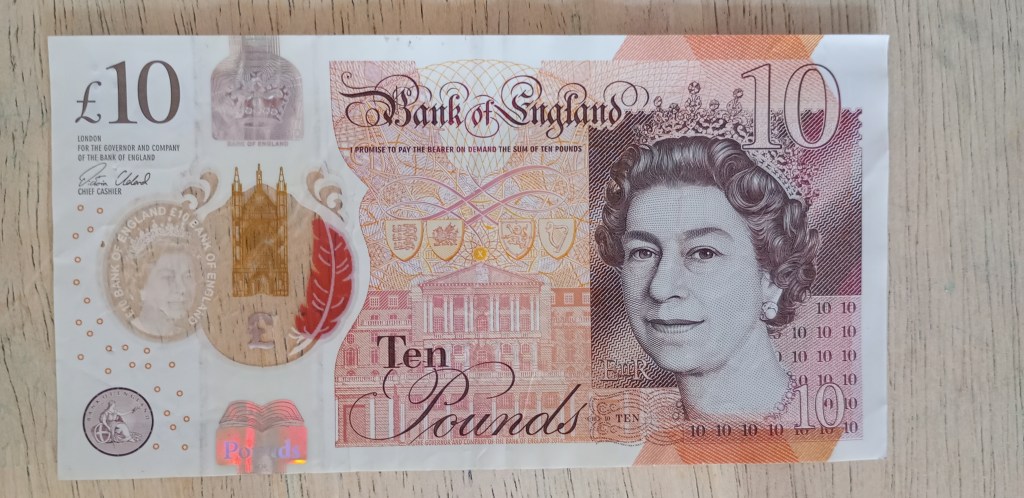
My final area of review – the one I think holds just as much sway on whether you’d use public transport (if you had a choice) as having access to it.
There are many factors to consider when looking at the overall cost of using public transport vs the car, but I’ll try my best to cover what I think are the most obvious ones.
Bus
At the moment, like many bus journeys in England, Route #1 has a single ticket fare cap of £3. This makes a return journey a total of £6. This applies to travel at any time of day.
Train
Trains have an on and off peak fare cost (plus many different discount options with railcards and season tickets), so prices can really vary.
To make it easier to compare, I’ve looked at the cost of an anytime return ticket, with no railcard, which is £11.70.
Car
Route #1 is a 36 mile round trip by car. Based on getting 30MPG and diesel prices at 137p per litre, it’s about £8. But fuel prices can fluctuate daily and there’s also the potential cost of parking to consider.
Another thing to factor in for the cost of the car, is all its running costs, which don’t apply to public transport.
Aside from the cost of the fuel, you’ll at least need to pay annually for insurance, an MOT and service. You may also have breakdown cover, car tax and repairs to factor in. And of course, you’ll have had to buy or lease the car in the first place.
A quick Google shows many websites estimating running a car to cost an average £300pm/£3,600 per year, including petrol. That’s an ongoing cost of around £10 a day.
Cost winner
The bus is the cheapest but only with the current fare cap in place. It’s most beneficial if you travel the whole of Route #1 because it costs the same whether you travel 40 miles or 4.
And, as long as you get a seat instead of being stood up and squashed between a load of strangers, public transport does all the work for you. You can sit back and relax.
BUT – and this is the kicker with public transport – it’s only most cost-effective when one person is travelling. As soon as you’re paying for multiple people to use the bus or train, costs sky-rocket.
If you had to pay a return fare for four adults to use the bus on Route #1, you’d pay £24. For the train, it’s £46.80.
But for the car? It’s still only £10. Winner: The bus – but only if you’re paying for one person.
The final result and my conclusion
Overall, it’s pretty much neck and neck for which one has won my very unscientific research piece. But, in reality, unless you live somewhere with very good public transport links, I just don’t think public transport in England can match having access to a car for ease and cost.
Unfortunately, I have to conclude that our public transport system just isn’t cost and time-effective enough for the majority of people who have a choice to choose a car over it, no matter how many emissions it might save.
Let’s connect
If you think Steph Martin Creative (that’s me!) can help your business, charity or community-focused organisation with their communications, please drop an email to hello@stephmartincreative.com.
Follow Steph Martin Creative: LinkedIn, TikTok, Facebook, Instagram and Pinterest.
Read my other blog posts
- Is the National Trust really a good place to take kids?
- My top six favourite examples of community in books and TV
- Can side hustles give you extra cash to support charities and your community?
- QUICK REVIEW (with pictures): Dyrham Park, National Trust
- Military history for everyone at the Army Flying Museum
- Cooking for causes
- My favourite community-centred YouTube channels
- Quick review (with pictures): California Country Park, Berkshire
- Quick review (with pictures): Coate Water Country Park, Swindon
- For the love of libraries
 About
About 